Leadership

Go-Look-See-BE: Why Leadership Presence Matters More Than You Think

Why understanding operational performance means looking beyond the data and recognising the influence leaders have when they go to where the work happens.
SM
Stephen Manley Director, Spitfire
7 min read· 25 Aug 2026
Screenshot 2026-08-25 at 10.37.46.png

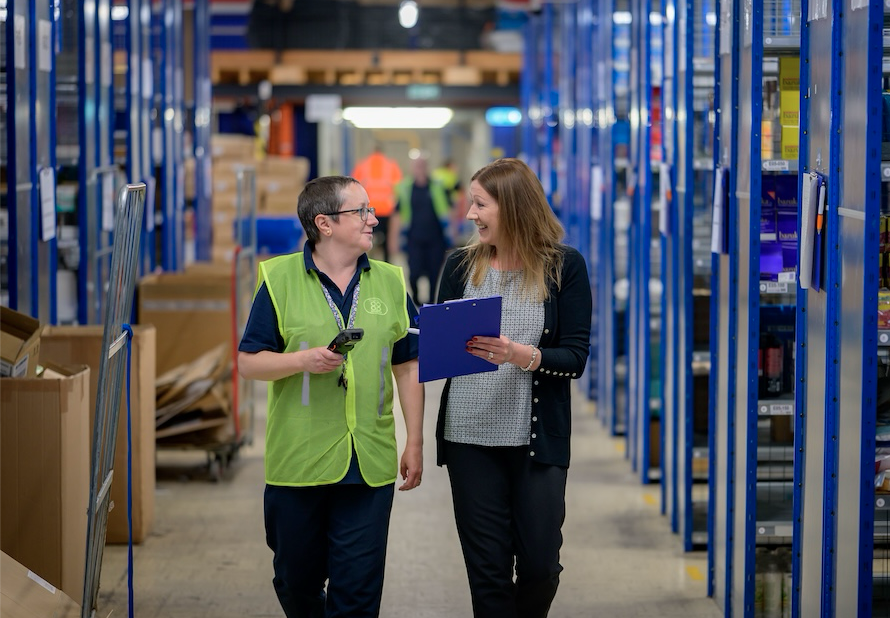
Lean introduced us to a simple but powerful principle: Go-Look-See.

Rather than relying solely on reports, dashboards or second-hand updates, leaders are encouraged to spend time where the work happens. Observe first-hand and understand the process. In doing so, we can learn from the people closest to the work.

It's a principle that has stood the test of time because it encourages curiosity over assumption.

Over the last twenty-five years, however, I've found myself thinking about Go-Look-See a little differently. Not because the principle is incomplete, but because I've become increasingly aware that leaders don't simply observe a system - they become part of it the moment they arrive.

The questions they ask, the assumptions they carry and the behaviours they model all influence what they are able to learn.

That has led me to add a fourth word in my own mind: Go. Look. See. BE.

The word BE isn't intended to replace the original principle. It's simply a reminder that our presence shapes the quality of the conversations we have and, ultimately, the insights we take away.

Three experiences have helped shape that thinking.

Looking Beyond the Dashboard

A number of years ago, I was supporting a hospital that reported consistently high compliance with the WHO Surgical Safety Checklist. From a governance perspective everything looked positive. The checklist was being completed and the associated performance measures reflected that.

One of the clinical leaders, however, suggested we spend some time observing in theatre.

As we watched, the process unfolded exactly as expected. The checklist was completed, the questions were asked and the team confirmed they had everything required to begin the procedure.

A few moments later, the surgeon requested a surgical marking pen.

The pen was available, but it had run dry.

It was a small moment, quickly resolved, yet it prompted an interesting discussion. The checklist had confirmed the equipment was present, but it hadn't explored whether everything was actually ready to support the procedure.

The data wasn't inaccurate; it was answering a different question.

That experience reinforced something I have seen many times since. Measures are essential because they help us understand performance over time, but they rarely provide the full picture on their own. Spending time where the work happens allows us to understand the context that sits behind the numbers and often reveals opportunities that would otherwise remain hidden.

Changing the Conversation

Earlier in my career I spent a great deal of time facilitating problem-solving workshops.

Like many people learning structured improvement techniques, I became a strong advocate of asking "Why?" repeatedly to uncover root causes. Although the method was sound, I noticed that some conversations became uncomfortable surprisingly quickly. People appeared to become defensive and discussions often focused on explaining decisions rather than exploring the process itself.

A mentor watched one of those sessions and offered some simple advice.

Instead of standing opposite people asking questions, stand alongside them and map the process together.

The next workshop felt noticeably different. Using a flipchart and Post-it Notes, we worked through the sequence of events collectively. Rather than asking individuals to justify what they had done, we explored how the work had flowed through the system and where it had begun to break down.

While the questions were broadly the same, the conversation felt very different.

People contributed more openly, challenged one another constructively and began identifying improvements themselves.

Looking back, I realised that facilitation is about much more than technique. People respond to the environment we create. When they feel they are helping us understand the work rather than defending their own actions, the quality of learning changes significantly.

Leadership Creates the Conditions

One visit to a food manufacturing business has stayed with me for many years.

The organisation was recognised for consistently strong operational performance, so I expected to learn about production systems, visual management and improvement routines.

Those elements were certainly present, but what caught my attention was the way the site's leader interacted with people.

There was an ease to every conversation with team members speaking openly. Ideas flowed naturally and there was an obvious sense of mutual respect. Not once did he give an instruction.

During our discussion I asked what he believed had contributed most to their success.

He smiled and replied, "I have a great team."

As I reflected on the visit afterwards, I found myself thinking less about the systems and more about the environment that allowed those systems to thrive.

Leaders often influence performance indirectly. They establish expectations, encourage particular behaviours and shape whether people feel comfortable identifying problems and suggesting improvements. Over time those behaviours become part of the organisation's culture.

Why Behaviour Matters

Many improvement programmes introduce better processes, clearer standards and more effective management routines. These are all important of course, but the greater challenge is helping those improvements become part of everyday behaviour.

Through coaching, I've often found that leadership habits are rooted in experiences that stretch back many years. One leader I worked with in my earlier coaching days always felt the need to provide the answer. On the surface this appeared to be a skills issue around delegation. As we explored it further, he recognised that this behaviour had developed much earlier in life as a way of proving his capability. He’d then developed a personal strategy of disproving his once-perceived inadequacies – invertedly had now stifled his team by being first with the answer.

Understanding that didn't excuse the behaviour, but it helped explain why simply encouraging him to delegate had achieved very little. He knew he needed to but didn’t know how. I had to work with his inner voice – which was far louder to him than anything I or anyone else could say.

Sustainable change often begins with greater self-awareness.

When leaders understand the beliefs and habits that influence their behaviour, they become better equipped to create environments where others can contribute, learn and take ownership.

Adding One More Word

For me, Go-Look-See remains one of the most valuable principles in operational excellence.

The additional word I've adopted simply broadens the lens.

  • Go to where value is created.

  • Look carefully and with curiosity.

  • See the relationships, interactions and realities that aren't visible on a dashboard.

  • And BE conscious of the influence you have while you're there.

People notice how leaders arrive, whether they listen and are genuinely curious. They know the difference between a question that seeks to understand than to confirm a pre-existing belief.

Those behaviours shape the conversation every bit as much as the questions themselves.

Questions Worth Taking With You

  • Before your next visit to the workplace, consider asking yourself:

  • What assumptions am I bringing with me today?

  • What do I hope to learn that I couldn't discover from a report?

  • How might my presence influence what people choose to share?

  • Am I exploring the process, or am I unintentionally evaluating the people

  • What would success look like for this conversation?

Afterwards, spend a few minutes reflecting:

  • What surprised me?

  • What did I learn that wasn't visible in the data?

  • What did I notice about the way I listened and responded?

  • What will I do differently next time?

These questions are simple, but over time they encourage a different kind of leadership conversation - one that focuses on learning as much as observation.

Final Thoughts

Improving operational performance will always involve better systems, clearer processes and disciplined execution.

Experience has taught me, however, that sustainable improvement also depends on the environment leaders create around those systems. When people feel trusted, listened to and involved in solving problems, improvement becomes something they own rather than something that has been implemented for them.

That is why the idea of Go-Look-See-BE continues to resonate with me.

Not because it changes Lean thinking, but because it reminds us that leadership is never separate from the system we are trying to understand. Every visit, every conversation and every question contributes, in some small way, to the culture we are creating.

Perhaps the most valuable thing we can observe during a Go-Look-See isn't only the work itself, but also the effect we have on it.

3.5×
ROI within 24 months
10–20%
Productivity improvement
<12mo
Typical payback

Can you see what’s really shaping performance?

Better performance starts with understanding what’s really happening where the work gets done. We help leaders turn that insight into practical, sustainable improvement.

Discuss your challenges