Performance
Your Business Already Has a Fitness Tracker. Are You Looking At It?
Why visibility, not more effort, is the real driver of manufacturing performance when growth is weak.

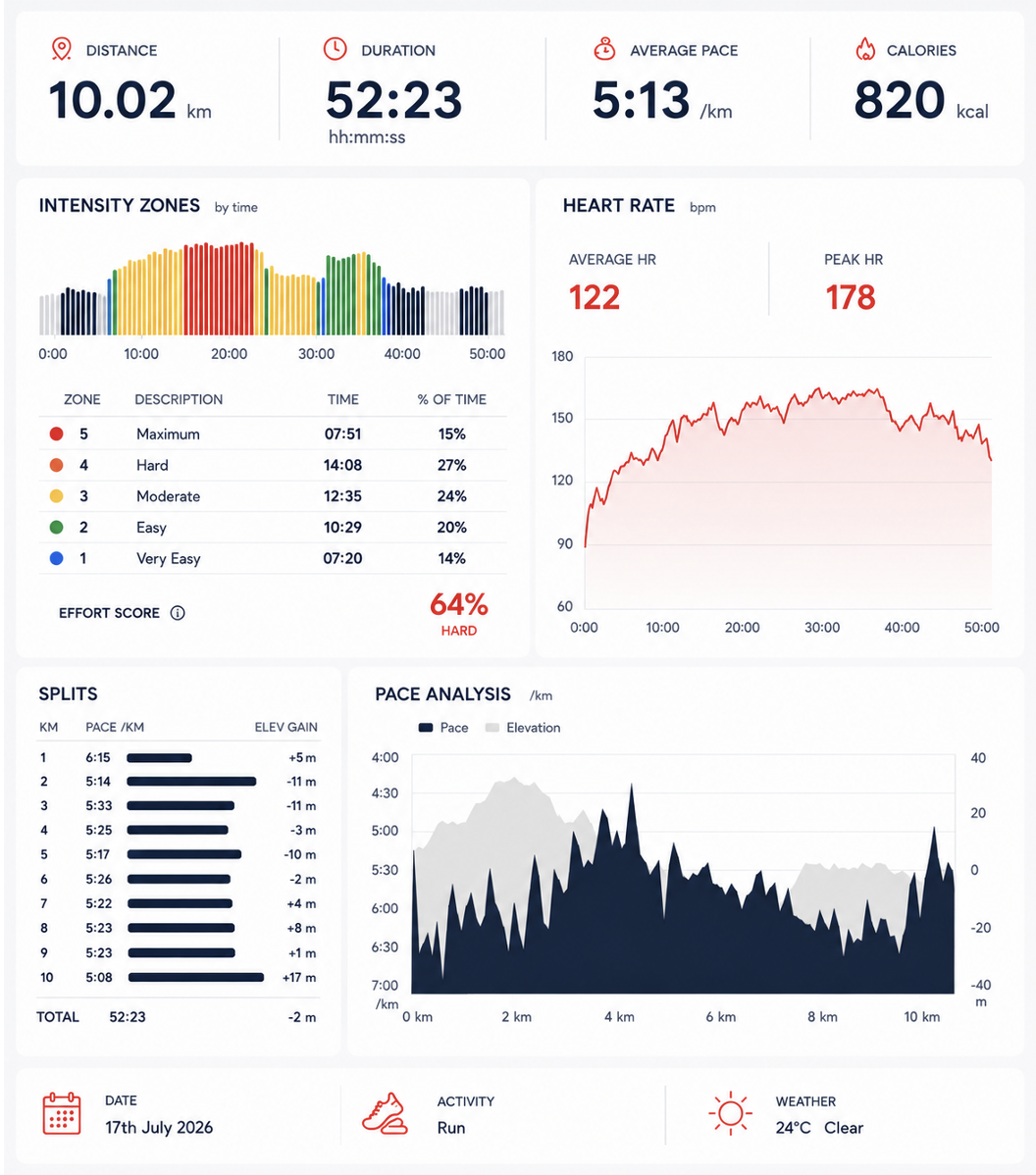
I've been running consistently this year and, like many runners, I've become slightly obsessed with the data.
Pace. Heart rate. Recovery. Cadence. Split times.
None of those numbers make me a better runner. They tell me where I am today so I can decide what to do tomorrow.
Some days I feel like I've had a strong run, only to find that my pace has dropped and my heart rate has been higher than normal. Other days I feel sluggish, but the data tells me I've improved.
Without that visibility, I would be relying on instinct, and instinct is often a poor coach.
Manufacturing businesses can fall into the same trap.
Many operations are working incredibly hard, but leaders do not always have a clear picture of current performance. They know people are busy. They know customer schedules are under pressure. They know costs are rising.
What they cannot always see is where output is being lost, where flow is breaking down or where management attention will have the greatest effect.
The latest Bank of England monetary policy briefing reinforced why this matters.
Inflation is expected to rise again during the second half of the year, driven by higher energy, transport and production costs. Interest rates remain restrictive, confidence remains subdued and many businesses are delaying investment until they can see a clear return.
In that environment, manufacturers cannot afford to carry hidden losses in downtime, rework, poor flow, labour utilisation, energy or working capital.
Operational performance becomes even more important.
When markets are growing strongly, inefficiency can sometimes be hidden. Rising demand can mask weak production control overtime becomes routine and premium freight is accepted as part of doing business.
In a slower economy, those same weaknesses become much harder to carry.
The manufacturers that perform well over the next few years will need to understand performance clearly, act earlier and focus improvement effort where it produces the greatest return.
The first step is making performance visible
There is rarely a shortage of data.
Most manufacturers already have ERP systems, production reports, spreadsheets and dashboards. The challenge is bringing the right information together in a way that helps people run the shift, manage the day and recover the plan.
Every production team should be able to answer a handful of straightforward questions:
Are we on plan for this shift?
Where are we losing output?
What is causing the gap?
What action are we taking now?
Who owns the recovery?
When will we know the issue is closed?
When those questions can be answered quickly, improvement becomes much more focused.
Recurring quality issues stop looking like isolated incidents. Bottlenecks become easier to identify. Overtime and shortages can be traced back to their real causes. Conversations move away from explaining yesterday's result and towards recovering today's plan.
Visibility creates better decisions
One of the things I like about running is that the data tells a story over time.
A single run matters less than the pattern.
Is my pace improving? Is my recovery getting faster? Am I spending more time in the right heart rate zones?
The same applies in manufacturing.
One poor shift does not define an operation. What matters is whether the same losses appear every day, whether actions are removing them and whether schedule, quality and productivity are moving in the right direction.
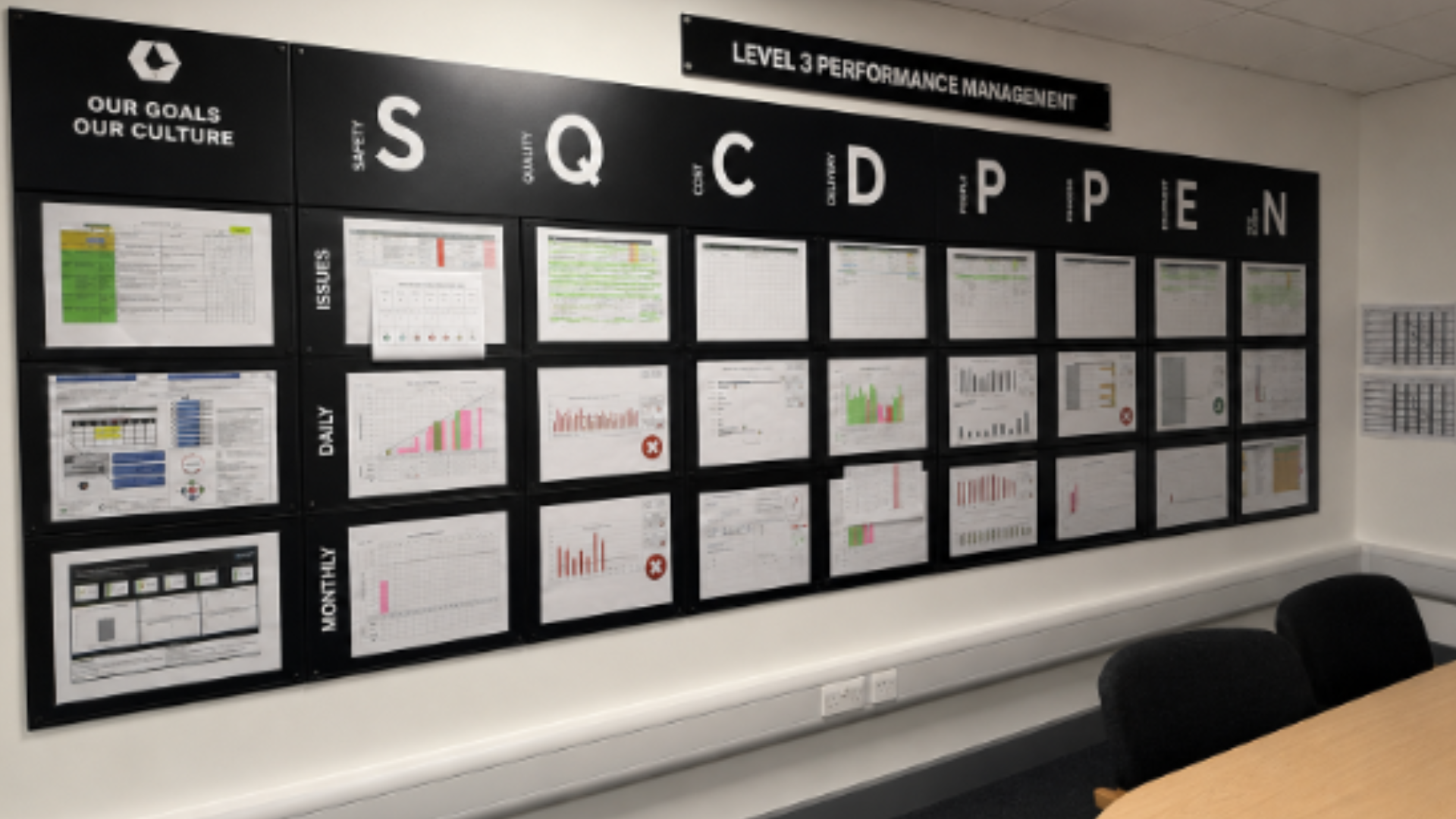
A good visual management system gives operators, team leaders and managers a shared understanding of current performance.
That allows teams to identify problems earlier, make decisions more quickly and follow actions through to closure.
This is where visual control starts to create value.
Data only matters if it changes what happens on the shop floor
The Bank of England also spoke about productivity as one of the routes to stronger economic growth.
Many conversations quickly move towards AI, automation and technology. These tools are most useful when the business already understands the performance problem it is trying to solve.
A dashboard cannot recover a missed production plan on its own, just as a fitness watch cannot improve my running.
Improvement comes when teams use the information to recover lost output, remove recurring barriers, reduce rework and downtime, improve schedule adherence and make better use of current people and assets.
With borrowing costs remaining high and investment decisions becoming more selective, many manufacturers will need to find better performance from the equipment, processes and capability they already have.
In many operations, the opportunity is already there.
Better visibility helps leaders find it and act on it.
Can your teams see where performance is being lost?
Can everyone in your business see whether the shift is winning or losing today?
When performance falls behind, is the gap visible, understood and owned?
At Spitfire Consultancy, we work alongside manufacturing leadership teams and frontline teams to create clear performance visibility, expose the issues holding the operation back and build the management routines needed to improve results.
That can include identifying losses in flow, capacity, quality, labour, delivery and working capital, then helping teams turn that insight into practical action.
If these challenges sound familiar, we would welcome the opportunity to meet, understand what is happening in your operation and discuss where Spitfire could help.